
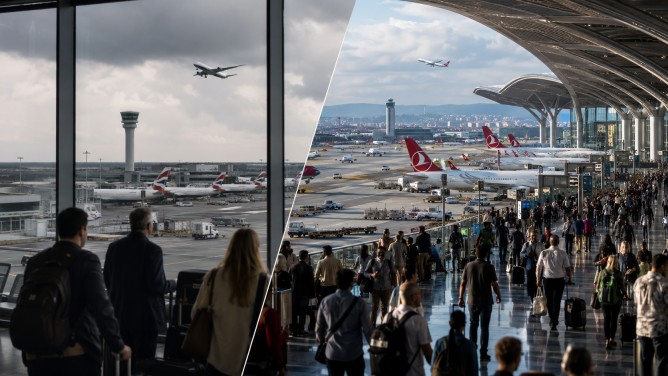
In a recent shift in air travel dynamics, Istanbul Airport has overtaken Heathrow Airport as the busiest European airport in terms of passenger numbers for July. During this month, Istanbul Airport managed to accommodate 8.15 million passengers, surpassing Heathrow’s figure of 7.86 million. This marks a noteworthy change in the aviation landscape, with Heathrow experiencing a 1.5% decline in passenger traffic compared to the same period last year, while Istanbul Airport saw a 2.3% increase.
The drop in Heathrow’s passenger numbers has been partly attributed to disruptions stemming from the ongoing conflict in the Middle East. This development is fueling renewed calls for the UK government to approve Heathrow’s long-debated third runway. Currently operating with two runways that are nearly at full capacity, Heathrow’s proposed expansion, estimated at £33 billion, aims to boost its annual passenger capacity to approximately 150 million. Airport officials argue that increasing capacity is crucial for enhancing the UK’s global connections, trade opportunities, and tourism industry.
Istanbul Airport, which commenced operations in 2018, benefits from a more extensive site and operates continuously around the clock. Presently, it has three operational runways, with plans for a fourth runway expected to be functional by the end of 2026. This strategic advantage allows Istanbul to cater to a higher volume of passengers, contributing to its rise in the rankings among European airports.
Elsewhere in the UK, other airports are also experiencing record-breaking passenger numbers. London Stansted Airport and Manchester Airport both reported their busiest July on record, with Stansted handling 3.1 million passengers and Manchester accommodating 3.4 million. These figures underscore the growing demand for air travel within the region, even amid challenges faced by larger hubs like Heathrow.