
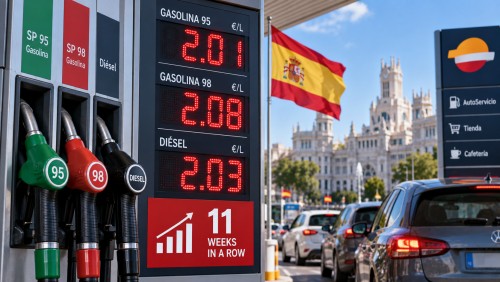
The global oil market is experiencing turbulence, with rising prices due to disruptions in energy supplies, particularly in the Middle East. This has caused significant ripple effects in countries heavily reliant on imported crude oil, such as Spain. As a result, petrol prices in Spain have been on an upward trajectory, reaching concerning levels for consumers across the nation.
In Aragón, more than 150 service stations are now charging over €2 per litre for petrol, a stark increase that highlights a broader national trend. The average price of regular petrol in Spain climbed to €1.866 per litre as of September 17, reflecting a 2.88% rise in just one week. Diesel prices have followed a similar path, now standing at €1.834 per litre after a brief dip.
These escalating costs come amid Spain’s dependence on imported crude, leaving it vulnerable to fluctuations in international oil markets. The situation stands to worsen for Spanish motorists with the looming expiration of the government’s temporary fuel discount on September 30. This measure currently offers a reduction of 5 cents per litre on petrol and 20 cents on diesel, providing some relief to consumers.
Industry forecasts suggest that the expiration of this discount could push diesel prices beyond €2 per litre, with petrol prices nearing that threshold. This expected increase underscores the importance of price comparisons among service stations, as consumers face rising household fuel expenses.
With Spain’s fuel costs continuing to climb, the end of government subsidies may further strain budgets, prompting both motorists and policymakers to consider long-term solutions to mitigate the impact of volatile energy markets.