
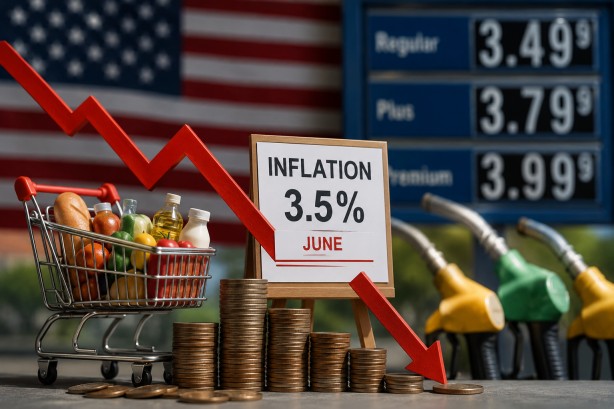
The pace of inflation in the United States eased to 3.5% in June, largely influenced by a temporary dip in energy prices that helped lower overall consumer costs. The latest figures from the Consumer Price Index (CPI) reveal a significant decrease in inflation rates, which had surged in the preceding months. A notable decline of 0.8% from May was observed, primarily driven by reduced gasoline and fuel prices. These decreases effectively counterbalanced the rising costs of essentials such as food, housing, and utilities.
Core inflation, a critical metric that strips out the volatility of food and energy prices and is scrutinized by the Federal Reserve, decreased to 2.6% on a yearly basis. This drop offers some relief, though experts caution that it might be fleeting. Heightened geopolitical tensions in the Middle East have already started to elevate global oil prices, with consequent increases in fuel costs impacting consumers and raising operational expenses in sectors like aviation and transportation.
The Federal Reserve is poised to evaluate this recent inflation data in conjunction with labor market conditions during its forthcoming policy meeting. Although inflation has shown signs of moderating, it continues to exceed the central bank’s long-term target of 2%. This situation injects a degree of uncertainty regarding the timing of prospective changes to interest rates.
Despite the current respite in inflation rates, the potential for further fluctuations remains, especially with the volatile nature of global oil pricing. The recent stabilization could be disrupted if upward trends in crude oil prices persist, potentially erasing the benefits consumers have experienced from lower energy costs. The Federal Reserve’s upcoming decisions will be closely watched as they strive to balance inflation control with economic growth.