
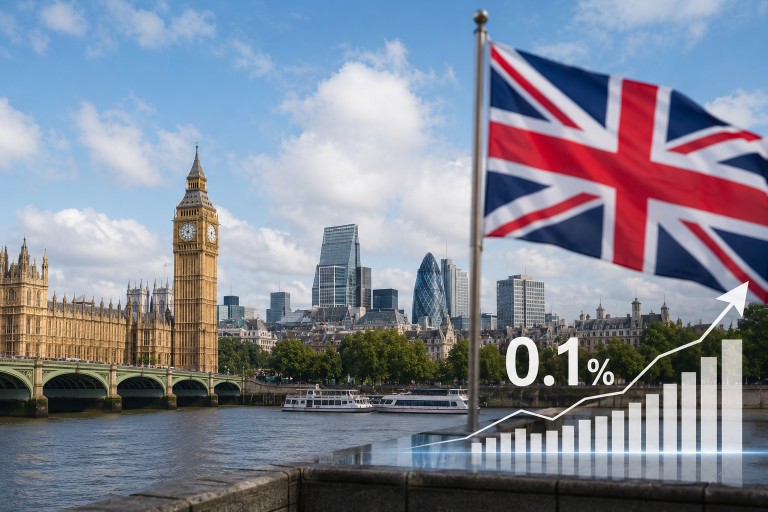
The United Kingdom’s economy managed a slight upturn in May, registering a 0.1% expansion following a similar contraction the previous month. This modest growth was largely buoyed by a 0.3% increase in the services sector, which helped counterbalance a 0.5% reduction in production and a notable 0.8% decline in construction activities. Particularly noteworthy was the robust performance in scientific research and development, which saw a 5.1% rise in activity during the same period.
When examined over the broader span of three months ending in May, the UK economy exhibited a growth rate of 0.7%. This represents a slight deceleration compared to the 0.8% growth rate observed in the preceding three-month period. Despite this slowdown, the economy demonstrated resilience in the face of persisting challenges.
Economic analysts highlighted the ability of the UK to maintain growth despite the headwinds posed by rising energy prices and the overarching uncertainty tied to ongoing conflicts in the Middle East. However, they remain cautious, pointing out that the economy continues to face potential threats from persistently high energy costs and ongoing supply chain disruptions, which could stymie further growth.
In light of these developments, the International Monetary Fund has adjusted its growth forecast for the UK, now projecting a 1% increase for the year. Despite this optimistic revision, analysts maintain a watchful eye on the situation, acknowledging that the economic outlook is still clouded by geopolitical tension and uncertainty.