
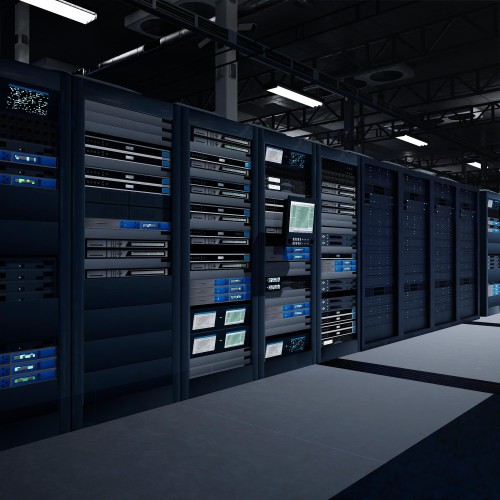
China has ascended to the pinnacle of global supercomputing with its latest innovation, the LineShine system, marking a significant return to dominance in this field after several years. This development underscores China’s advancement in cultivating homegrown computing technologies. However, experts caution that this does not necessarily indicate that China has surpassed the United States in the realm of artificial intelligence.
The LineShine supercomputer, housed at the National Supercomputing Centre in Shenzhen, is powered by chips developed domestically, allowing it to outperform the previously top-ranked system from the US. Despite this achievement, analysts emphasize that traditional supercomputer rankings are not fully indicative of a system’s prowess in handling modern AI workloads, which often require different metrics for evaluation.
These rankings focus on machines engineered for scientific computing tasks, whereas the most formidable AI systems globally are typically constructed by major technology firms and do not feature in these rankings. Experts point out that cutting-edge AI computing heavily relies on specialized chips and extensive data center infrastructure, highlighting a different set of capabilities.
China’s re-emergence at the forefront of supercomputing is perceived as a testament to its ongoing efforts to enhance self-sufficiency in chip design and computing technology. Nonetheless, the country continues to face challenges, particularly in gaining access to advanced AI chips, which poses a barrier to further advancements in its AI sector.
The rivalry between China and the United States in advanced computing fields is intensifying, with both nations making substantial investments in artificial intelligence, quantum technology, and next-generation computing systems. This competitive landscape underscores the strategic importance both countries place on technological supremacy and innovation.