
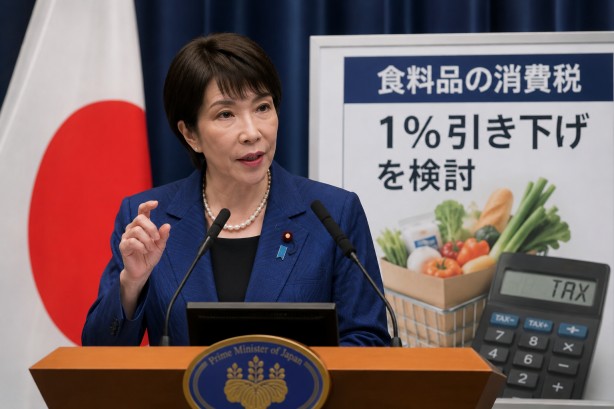
In a significant move aimed at easing the financial strain on households, Japanese Prime Minister Sanae Takaichi is set to direct the ruling Liberal Democratic Party to advance a proposal that seeks to slash the consumption tax on food items. The proposed tax reduction, scheduled to take effect in April 2027, would see the current rate drop from 8% to 1% for a duration of two years.
This initiative emerges in the wake of stalled negotiations among various political parties concerning tax reform efforts. The government, in collaboration with the ruling coalition, is endorsing this temporary tax cut as part of a broader strategy that includes cash assistance specifically targeted at low- and middle-income households. The comprehensive plan aims to provide around ¥600 billion in financial support, designed to mitigate the growing cost-of-living pressures faced by many citizens.
The government’s proposal underscores a commitment to alleviating economic burdens and reflects a strategic response to ongoing debates over tax policy. By proposing this tax cut alongside direct financial aid, policymakers seek to offer immediate relief to those most affected by economic challenges, without abandoning long-term fiscal objectives.
As the plan takes shape, officials intend to finalize the policy details by early August. This timeline is crucial to prepare for the introduction of necessary legislation during an extraordinary parliamentary session anticipated later in the year. The goal is to ensure that the proposed measures are implemented smoothly and on schedule by the coming April.
Through this coordinated approach, the Japanese government aims to address the pressing needs of its populace while navigating the complexities of legislative processes and political consensus-building. The proposed tax cut and financial assistance are part of a larger effort to sustain economic stability and improve the quality of life for citizens amid shifting economic conditions.