
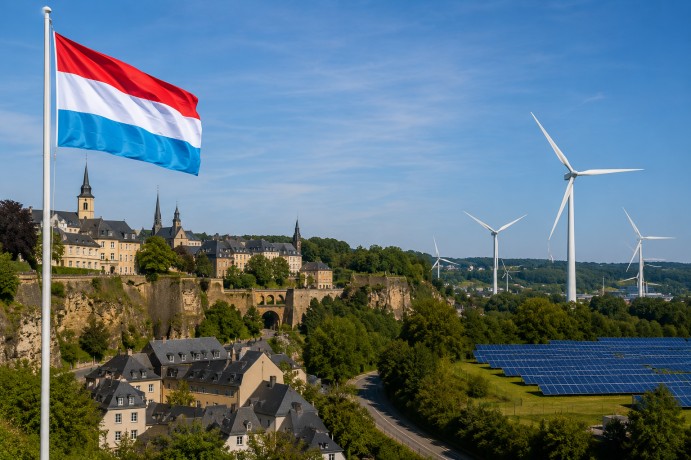
In 2025, Luxembourg found itself among the lowest-ranking countries in the European Union for renewable electricity consumption, as reported by the most recent Eurostat data. Despite a general increase in the use of renewable energy sources throughout the EU, Luxembourg’s efforts in this area placed it near the bottom of the list. Renewable energy sources contributed to just 20.2% of the nation’s gross final energy consumption, making it one of the less successful EU members in terms of renewable energy utilization.
When focusing specifically on electricity, Luxembourg’s figures were also concerning, with only 23.3% of its gross electricity consumption derived from renewable sources. This percentage was only slightly better than that of Czechia and Malta, the two countries that trailed Luxembourg in the EU rankings. The broader EU saw a more positive trend, with renewable energy comprising 26.2% of its gross final energy consumption in 2025. This was a significant increase from just 9.6% in 2004, reflecting the EU’s commitment to expanding the use of renewable energy sources.
The EU has set an ambitious target to further increase the share of renewable energy to 42.5% by the year 2030. While Luxembourg struggles to keep pace, other countries are leading the charge. Sweden, for example, stood out with an impressive 65.4% of its overall energy consumption coming from renewable sources, making it the frontrunner in the EU for renewable energy adoption. Finland and Denmark also showed strong performances, closely following Sweden’s lead in integrating renewable energy into their national grids.
Austria distinguished itself in the area of renewable electricity consumption, generating more than 90% of its electricity from renewable sources. This achievement underscores the potential for EU countries to transition to cleaner energy and highlights the disparities that exist within the bloc. With targets set for the coming years, the EU continues to push for greater reliance on renewable energy, aiming to build a more sustainable future for all member states.