
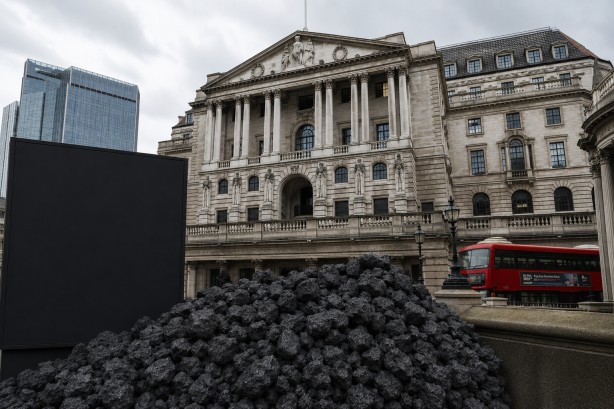
In a decisive move to mitigate climate-related financial risks, the Bank of England has declared that starting October, it will cease accepting bonds tied to thermal coal companies as collateral in its lending operations. This action marks a pivotal shift in the central bank’s approach to dealing with environmentally harmful financial assets.
Traditionally, commercial banks rely on bonds as collateral when borrowing from the central bank to facilitate their daily functions and transaction settlements. However, under this new directive, bonds associated with thermal coal—the fossil fuel commonly utilized in power plants for electricity generation—will be excluded from eligibility. This aligns with the broader global efforts to transition towards cleaner energy sources and achieve net-zero emissions targets.
The Bank of England has highlighted the increasing financial risks faced by companies engaged in thermal coal production, as international initiatives intensify to curb carbon emissions. The central bank anticipates that assets linked to coal could depreciate significantly over time due to these shifting dynamics. Furthermore, the policy includes provisions to apply discounts to bonds from other sectors that are vulnerable to climate risks, as a strategy to safeguard the bank’s balance sheet from potential devaluation.
Environmental advocates have praised this initiative, interpreting it as a robust message to financial markets. They believe it could prompt commercial banks to reevaluate and potentially diminish their investments in industries with high pollution levels. Globally, more than 150 major financial institutions have already enacted similar restrictions on business dealings with the thermal coal sector.
Analysts caution, however, that the success of this policy will largely hinge on the accuracy of climate risk assessments and whether similar restrictions will be imposed on other environmentally detrimental activities in the future. The Bank of England’s stance reflects a growing recognition of the need to integrate climate considerations into financial decision-making processes.